


Best Grain Market Intelligence Platforms: What to Compare
Compare seven grain market intelligence platforms by physical prices, supply-and-demand data, reports, coverage, integrations and user needs.
- grain market intelligence platform
- grain market data
- grain price data
Choosing the best grain market intelligence platform depends on the data your team needs, the markets you operate in and the decisions you need to make. Some platforms focus on farm-level grain marketing, while others provide physical cash prices, supply and demand data, commodity price assessments, analyst reports or broader agricultural market intelligence.
For commercial grain traders, procurement teams and market analysts, the key is understanding how these capabilities differ and whether the information supports real physical-market decisions.
This guide compares seven grain and agricultural market intelligence platforms, explains the features worth evaluating and outlines which types of users each option may suit.
The Best Grain Market Intelligence Platforms
The platforms below serve different needs across the agricultural market. They are not interchangeable, and the right choice depends on your role, geographic coverage requirements and preferred data sources.
1. Black Silo: Physical Grain and Oilseed Market Intelligence Platform
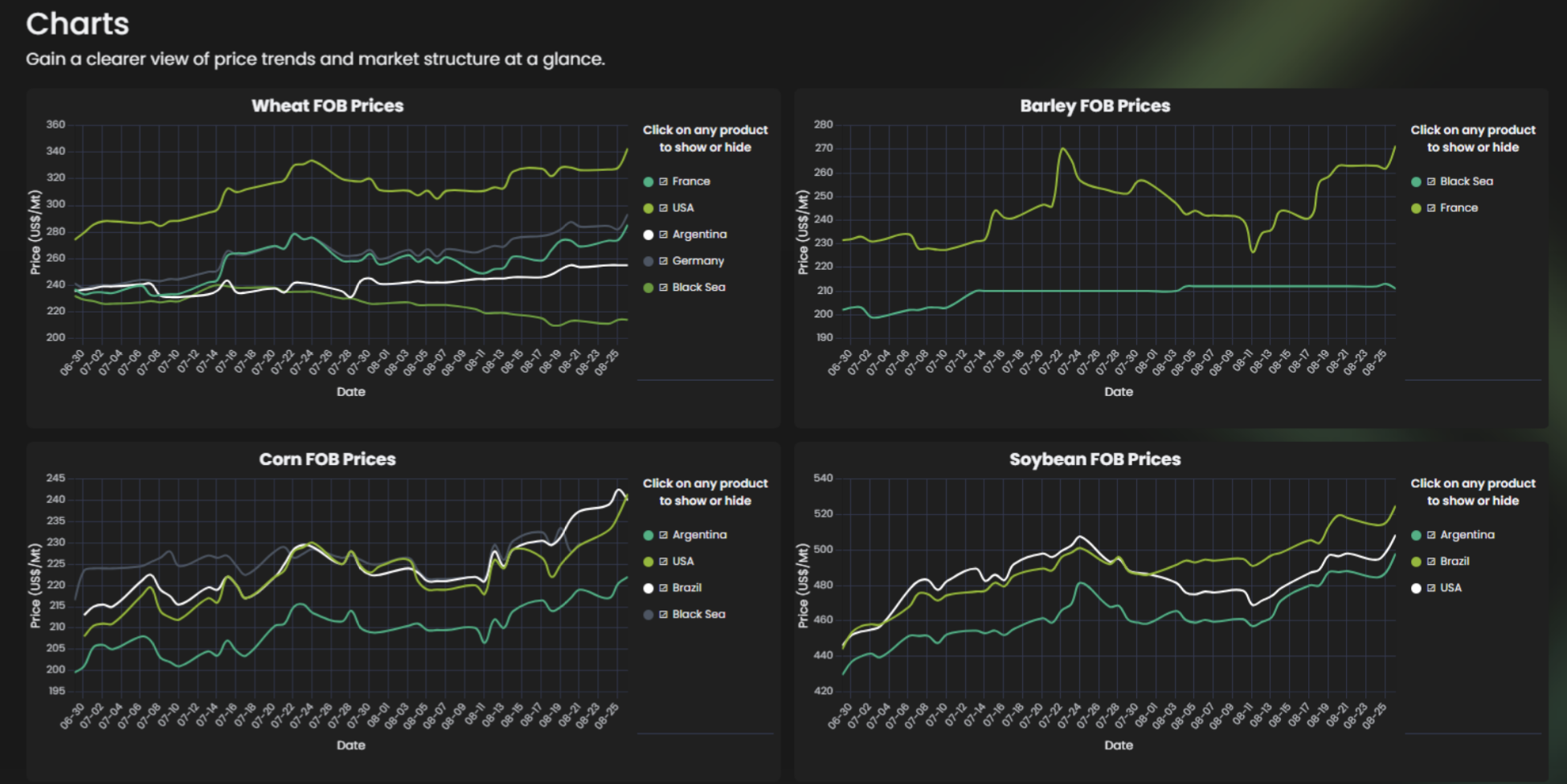
Best for: Commercial grain traders, grain processors, procurement teams and market analysts who need physical cash prices, supply and demand data, and independent analyst interpretation.
Black Silo is a grain and oilseed market intelligence platform focused on physical-market decisions. It brings together directly sourced cash prices, historical price charts, supply and demand estimates, market news and Fryer's Reports.
The platform helps commercial teams assess price movements in the context of local availability, changing supply-demand balances and developments affecting physical grain markets.
Key capabilities include:
Physical cash prices: Directly sourced prices for comparing origins, benchmarking bids and offers, and assessing competitiveness.
Historical price charts: More than 20 years of physical price history to help users examine market movements and compare prices over time.
Supply and demand data: Estimates from Black Silo, USDA, the European Commission, FranceAgriMer and Coceral, allowing users to compare data points like production, consumption, imports, exports and stocks.
Analyst reports: Fryer's Reports covering wheat, feedgrains, proteins and other relevant market developments, EU–Black Sea markets, including morning reports and broader market outlooks.
Market news: Analyst updates on weather, crops, trade, logistics, policy and other developments affecting physical markets.
Black Silo is particularly relevant when a team needs to compare cash prices with supply-demand information and analyst views before making pricing, procurement or hedging decisions.
Explore the Black Silo grain and oilseed market intelligence platform.
2. GrainFox: Grain Marketing for Producers
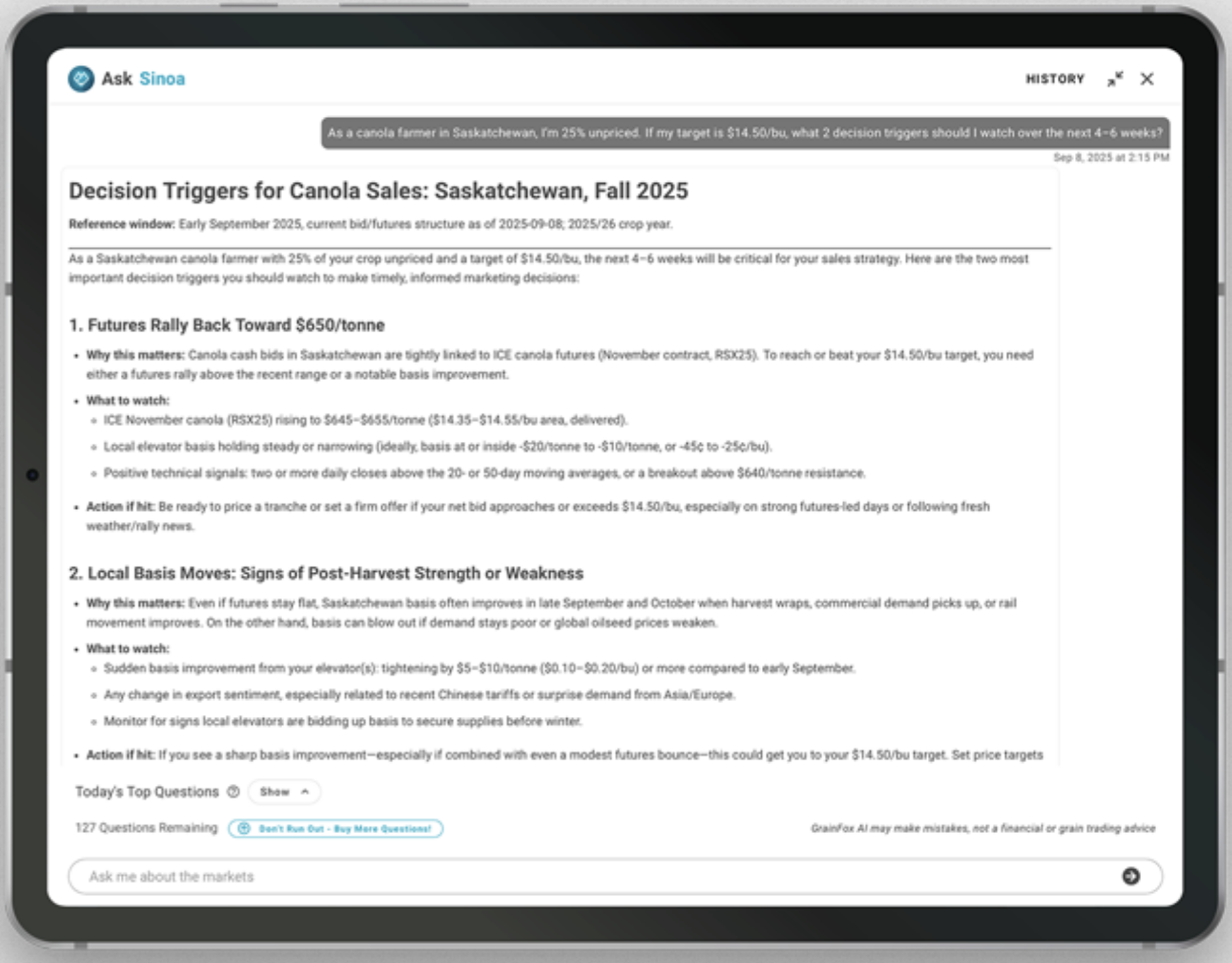
Best for: Agricultural producers looking for tools to support grain marketing and selling decisions.
GrainFox focuses on grain marketing and farm-level decision support. Its offering is relevant to producers who need to evaluate marketing opportunities and understand how selling decisions affect farm economics.
When evaluating GrainFox, examine its coverage of the crops and regions you operate in, the market data behind its recommendations, and the availability of tools for comparing selling scenarios.
It is a different proposition from a platform primarily designed to provide commercial grain traders with physical cash prices, market balances and analyst reports.
3. FBN Market Intelligence: Farmer-Oriented Market Information
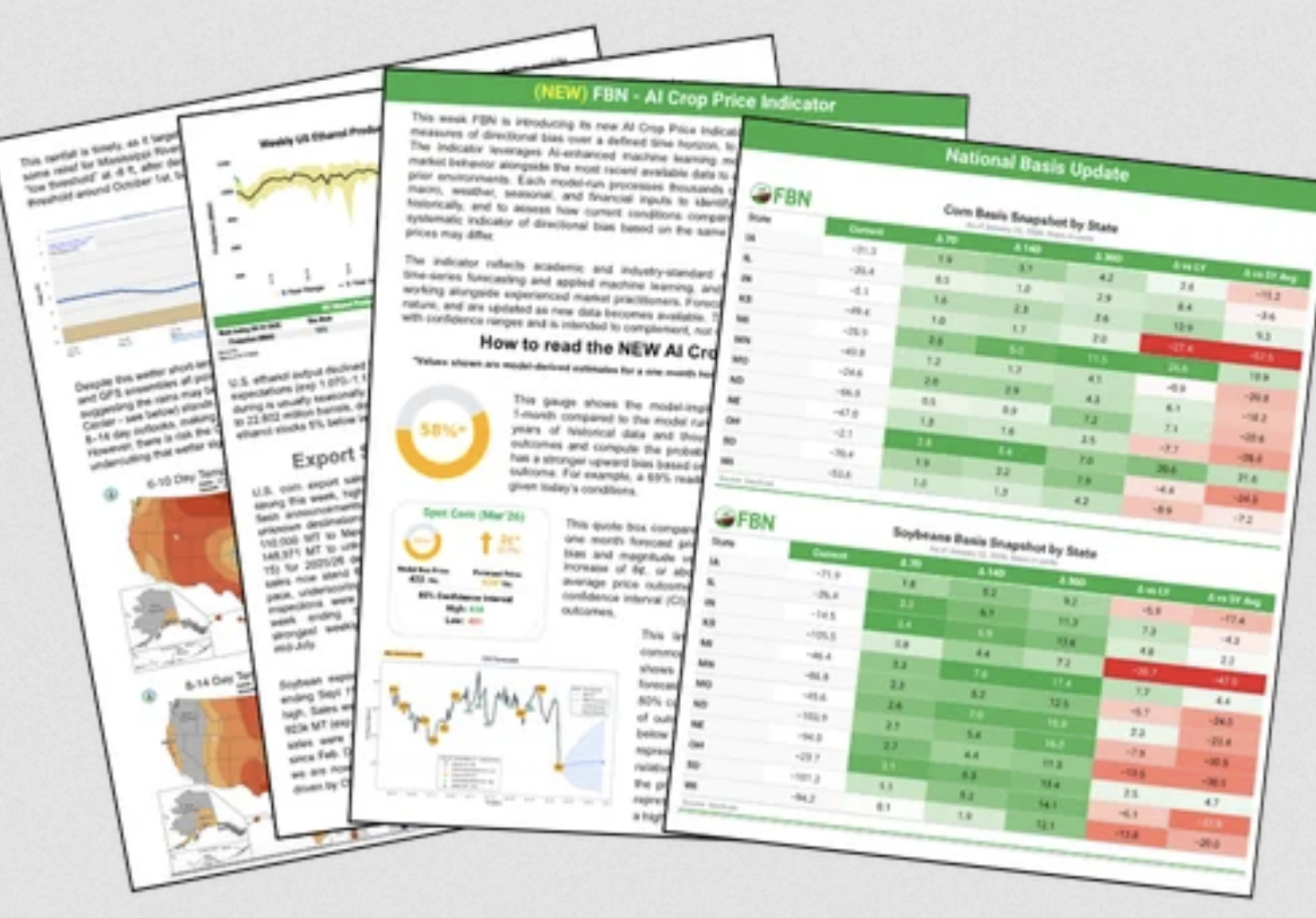
Best for: Producers seeking market information to support crop marketing decisions.
Farmers Business Network offers agricultural services and market information aimed at helping producers make business decisions. Its market intelligence offering should be evaluated in the context of farm-level marketing needs, crop coverage and regional relevance.
Before choosing FBN, investigate the availability and frequency of relevant cash-market information, the depth of historical data, and whether its tools fit your selling workflow.
Producers comparing FBN with a commercial grain market intelligence platform should distinguish between farm-oriented marketing support and broader physical-market analysis.
4. DTN Grain Intelligence: Grain Market Information and Commercial Needs
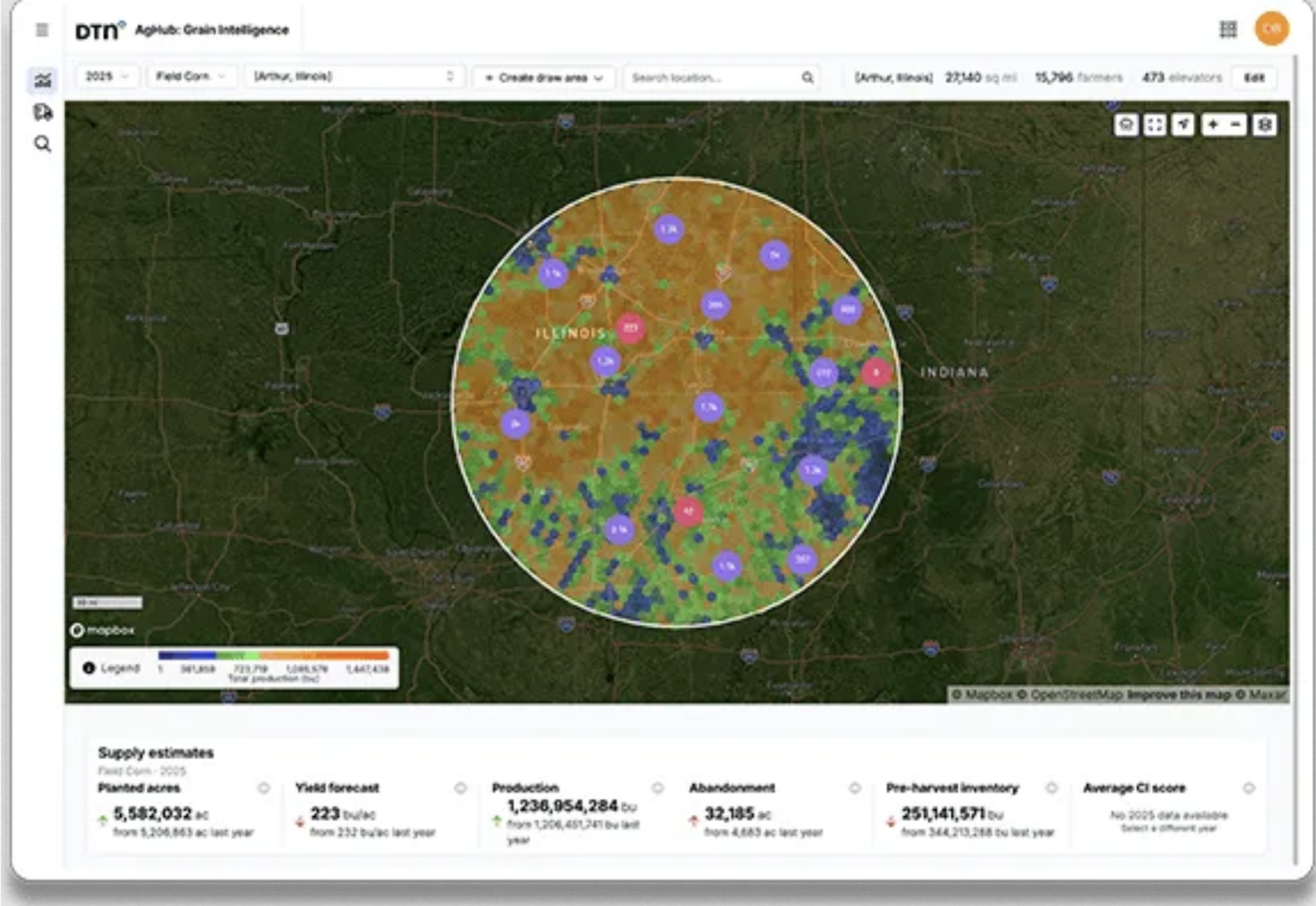
Best for: Buyers evaluating grain market information for their particular trading or commercial workflows.
DTN provides information and technology services across weather, agriculture, and commodity markets. Its grain-related offerings should be assessed according to the specific product, market coverage, and functionality required. Important evaluation criteria include physical cash price coverage, historical data, supply-demand analysis, market reporting, and integration options.
If your team needs enterprise trading, logistics, or risk-management capabilities, verify which functions are included in the specific DTN offering under consideration, especially as DTN's tools lean heavily into internal operational and ERP-style execution rather than standard market intelligence analysis.
5. Vesper: Agricultural Commodity Intelligence
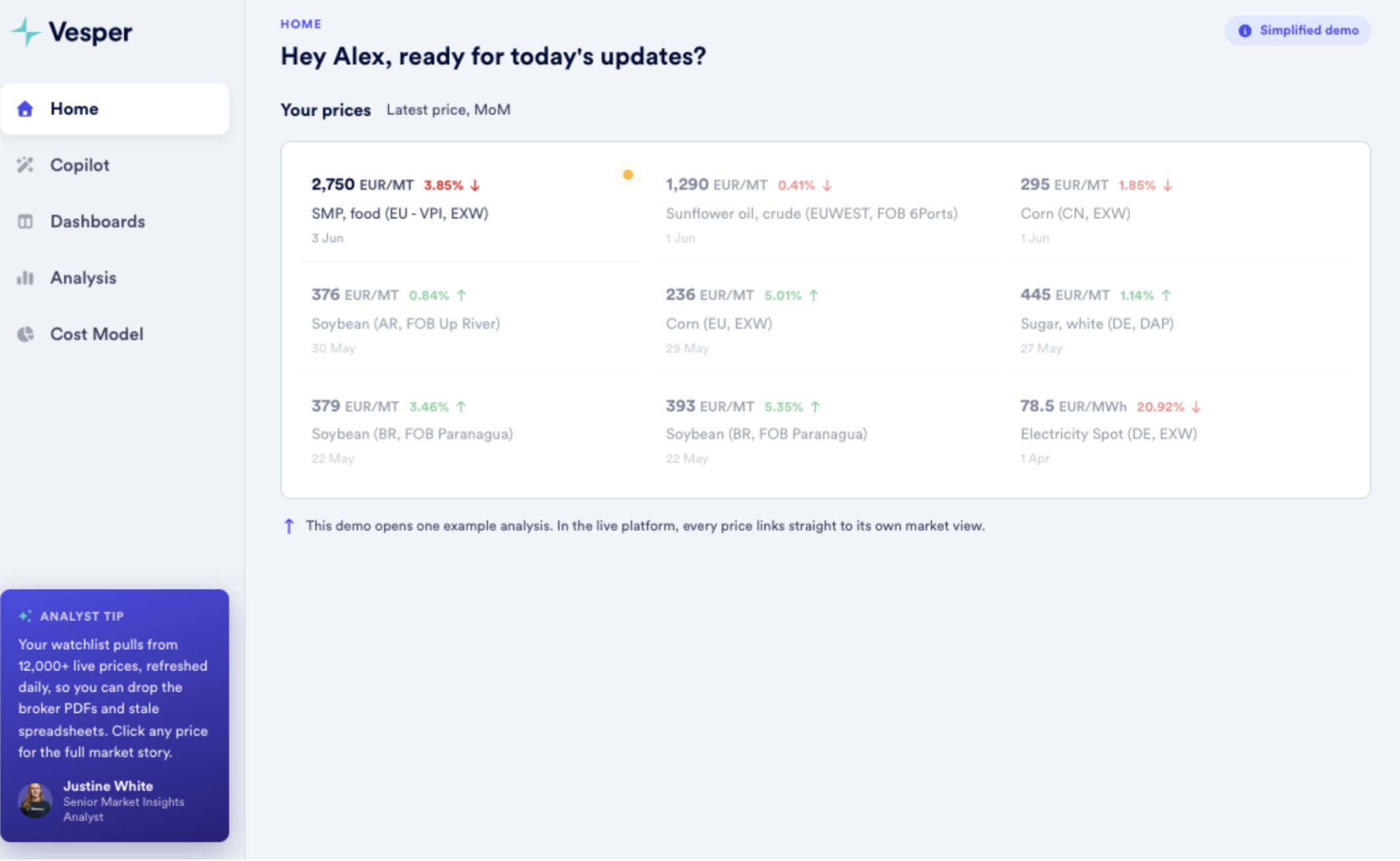
Best for: Businesses comparing agricultural commodity data across multiple markets.
Vesper provides agricultural commodity intelligence, including coverage across several agricultural sectors. This can be relevant for businesses that need to monitor more than one commodity category or compare market information across different regions.
When evaluating Vesper for grain intelligence, examine the depth of its grain and oilseed coverage, price data methodology, update frequency, analyst research and historical data availability.
Broad commodity coverage can be useful, but buyers should also assess whether the platform provides enough detail for the specific origins, commodities and physical-market decisions that matter to their business.
6. Expana: Commodity Price Reporting and Market Intelligence
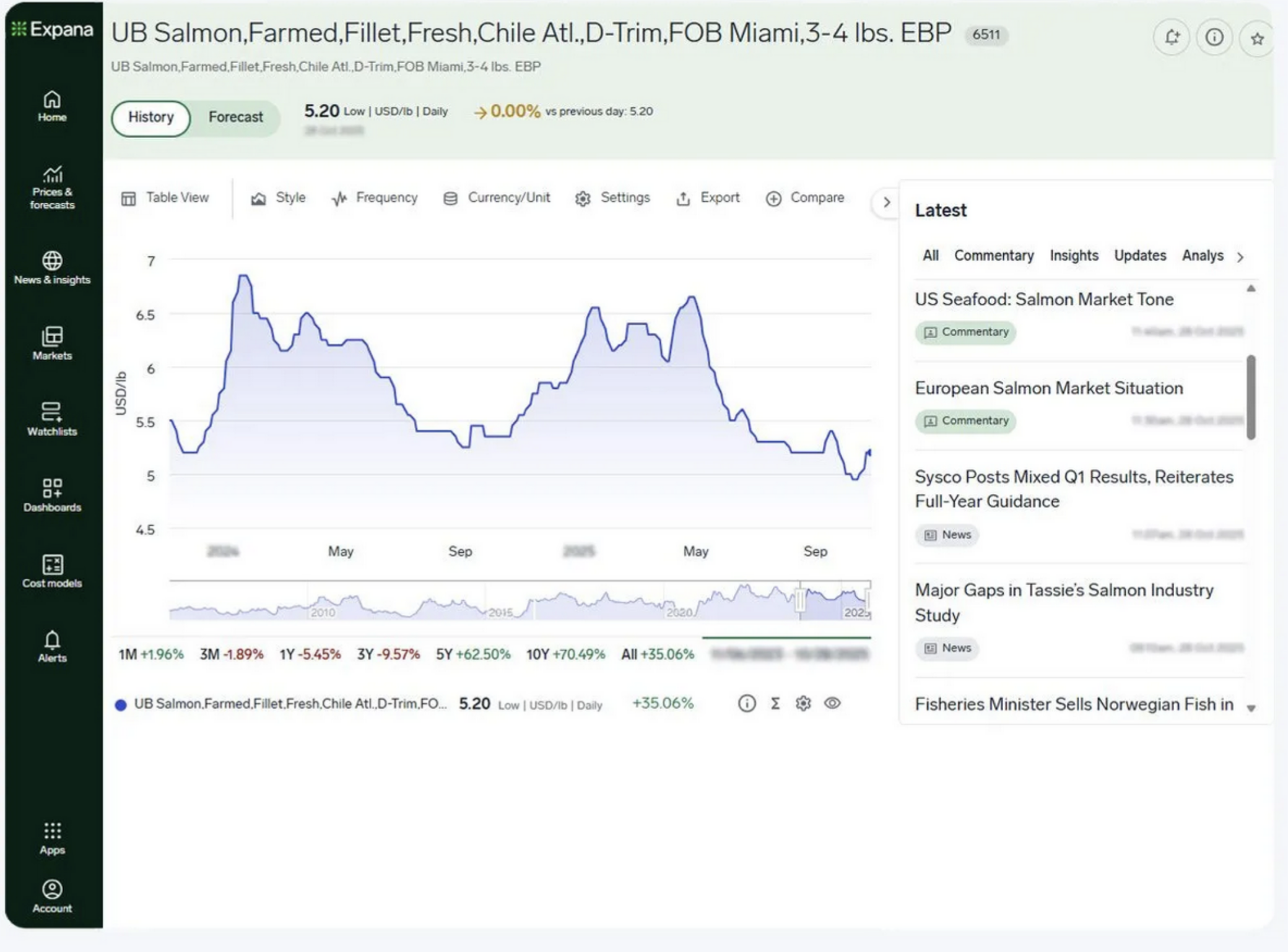
Best for: Businesses that need commodity price reporting and broader market intelligence.
Expana provides market intelligence and price reporting across commodity and food-related markets. Its relevance to grain buyers depends on the specific products and market coverage available.
Evaluate the benchmarks provided, the methodology behind price assessments, the commodities covered and the level of analyst insight available.
For teams operating across multiple commodity categories, breadth may be an advantage. For businesses focused on physical grain trading, the important question is whether the available data offers sufficient origin-level detail and practical context for pricing and procurement decisions.
7. Grain Report by SDSU Extension: Accessible Agricultural Market Information
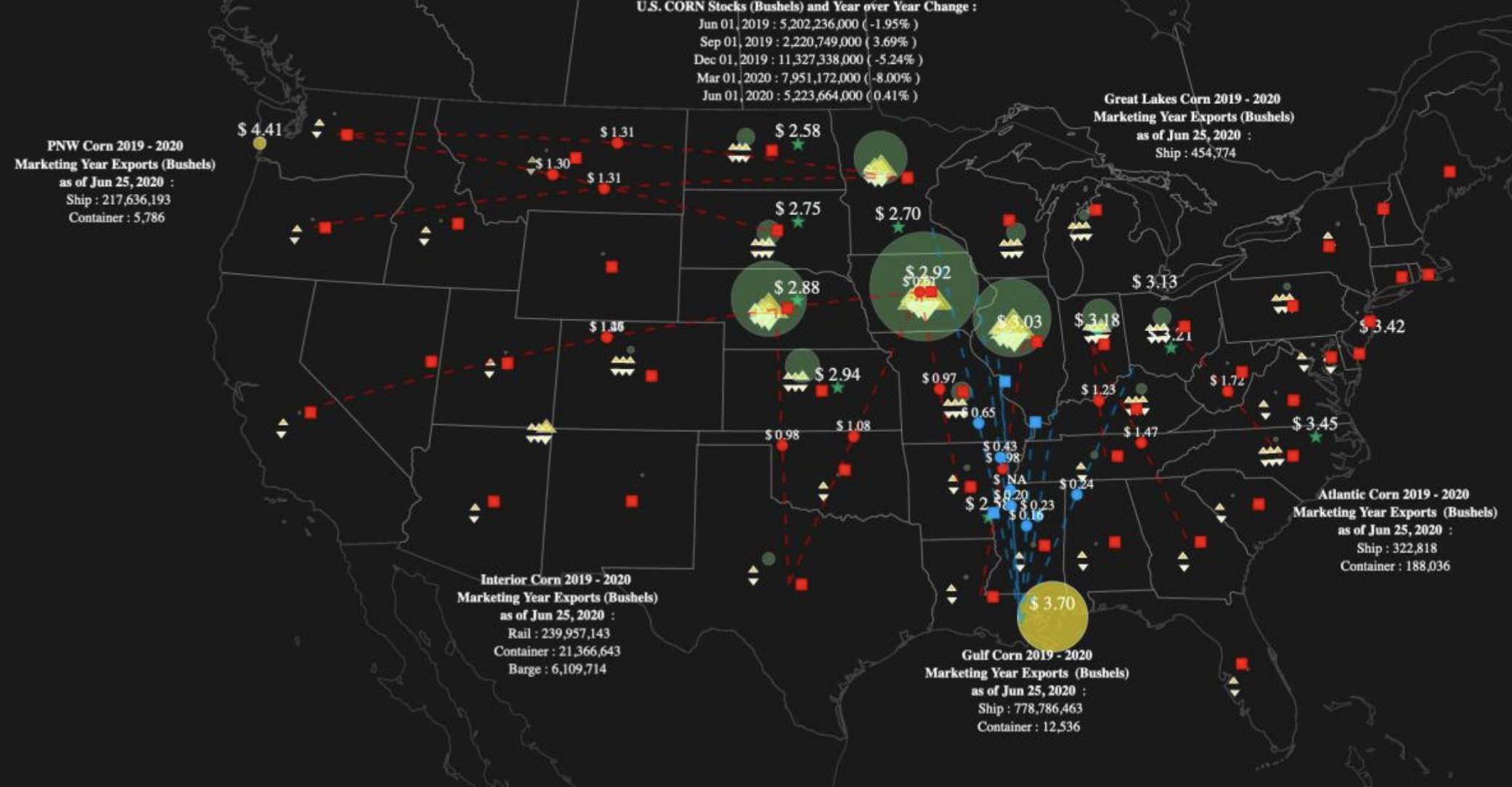
Best for: Users looking for an accessible reference for agricultural market information.
The Grain Report associated with South Dakota State University Extension has been described in the supplied search results as a mobile-oriented dashboard for grain-market information.
It is worth investigating for users who want a convenient reference for public agricultural data, prices and related market indicators.
Before relying on it for commercial decisions, verify its current availability, supported markets, data sources, update frequency and analytical capabilities. Public dashboards and subscription market intelligence platforms may serve different purposes, particularly when users require deeper historical data, directly sourced physical prices or specialist analyst reports.
How to Compare Grain Market Intelligence Platforms
A platform's feature count alone does not establish its value. The more important question is whether its data is relevant to your market and helps you make better-informed commercial decisions.
1. Physical Cash Prices and Historical Data
Grain futures prices and physical cash prices provide different information. Futures reflect exchange-traded contracts, while physical cash prices relate to grain in specific markets, origins and delivery conditions.
A platform intended for physical grain-market decisions should make it possible to assess the prices relevant to the user's trading or procurement activity.
Consider:
Are prices physical cash prices, futures quotes or assessed benchmarks?
Which origins, delivery points and commodities are covered?
How frequently are prices updated?
How much historical data is available?
Can you compare prices across origins and periods?
Is the source or methodology behind the data explained?
Historical data is particularly useful for examining whether a price movement is unusual, how origin competitiveness changes over time, and how current market conditions compare with previous periods.
2. Supply and Demand Data
Supply and demand data helps users assess the broader balance between production, consumption, trade and stocks.
For grain traders and analysts, a useful platform should make it possible to investigate estimates for relevant commodities and countries, rather than relying on a single headline forecast.
Evaluate whether the platform provides:
Production and consumption estimates.
Import and export data.
Stock estimates and balance indicators.
Data by country, commodity and harvest year.
Identifiable sources and publication dates.
Comparisons between estimates from different organisations.
Source transparency matters because estimates can differ in scope, timing and methodology. Comparing figures from organisations such as USDA, the European Commission, FranceAgriMer and Coceral can help users understand where forecasts agree or diverge.
The objective is not simply to collect more numbers. It is to understand how changing balances could affect availability, trade flows and prices.
3. Geographic and Commodity Coverage
A platform may offer extensive global coverage while providing limited detail for the specific market a user needs.
Check the availability of your relevant commodities, including wheat, corn, barley, oilseeds and protein meals where applicable. Then examine coverage by origin, destination, country and marketing year.
For a European grain trader, detailed information on relevant European and Black Sea markets may be more useful than broad coverage with limited regional depth.
For a producer, local cash bids and regional marketing information may be more important.
The best grain market intelligence platform is therefore not necessarily the one with the largest commodity list. It is the one that covers the markets relevant to your decisions at a useful level of detail.
4. Trade Flows, Exports and Shipping Data
Trade-flow information can help users understand how grain moves between producing and consuming regions.
However, trade statistics, vessel tracking and port loading analytics are distinct capabilities. A provider that offers one should not automatically be assumed to offer the others.
If physical logistics and seaborne trade matter to your business, check whether the platform provides:
Historical import and export statistics.
Origin-to-destination trade data.
Vessel-level tracking.
Port loading information.
Shipment estimates and reported volumes.
Coverage of the relevant commodities and trade routes.
Also establish how the data is collected, how frequently it is updated and whether reported, estimated and observed figures are distinguished.
These features are particularly relevant to teams monitoring export availability, shipment activity and potential changes in physical supply.
5. Analyst Reports and Market News
Market data shows what has changed. Analyst reports and news help users investigate why it changed and what it could mean for their business.
When comparing providers, consider the frequency of reporting, the expertise behind the analysis, the markets covered and whether the commentary connects developments to physical prices and supply-demand conditions.
For example, a report covering a crop outlook, export restrictions or weather developments should help readers understand the possible implications for relevant grain markets rather than simply repeat the news.
Check whether reports are published on a predictable schedule, whether historical reports are accessible, and whether the analysis is specific enough to support your decisions.
6. Data Transparency and Reliability
Market intelligence is only useful when users can understand and assess the information behind it.
Look for clear data provenance, documented methodologies, identifiable source organisations and transparent update schedules.
Questions worth asking include:
Can users identify the source behind a supply-demand estimate?
Are historical data and revised estimates distinguishable?
Are price collection and assessment methodologies explained?
Does the provider document corrections?
Can users compare the analysis with the underlying data?
Transparency is especially important when market estimates conflict. Being able to examine the evidence makes it easier to challenge assumptions and form an independent market view.
7. Decision Support for Pricing, Procurement and Hedging
Different teams use market intelligence for different purposes.
A trader might compare cash prices across origins before negotiating a purchase. A procurement manager might monitor changes in availability and supplier offers. A risk manager might use physical-market information alongside basis and hedging analysis.
Assess whether the platform supports the decisions your team actually makes.
Relevant capabilities may include price benchmarking, historical comparisons, supply-risk monitoring, analyst commentary and information that helps users evaluate basis and hedging decisions.
Be clear about the distinction between market intelligence and financial advice. A platform can inform a hedging decision without necessarily executing trades or providing a complete risk-management system.
8. API Access, Integrations and Usability
For some organisations, market intelligence needs to be incorporated into internal reporting, procurement systems or analytical workflows.
Check whether the provider offers API access, downloadable data, suitable formats, documentation and licensing that permits the intended use.
Also consider usability. Can the relevant data be found quickly? Can users compare markets without exporting everything into spreadsheets? Is the information accessible to the teams that need it?
The most sophisticated data offering may not be the best fit if it is difficult to incorporate into everyday decisions.
9. Pricing and Access
Pricing should be assessed against the data coverage and capabilities your organisation actually needs.
Some services provide public market information or free dashboards. Specialist commercial platforms may offer proprietary data, deeper histories, analyst research or additional functionality through paid subscriptions.
Ask providers about:
Subscription and licensing costs.
Which commodities and origins are included.
Whether analyst reports require separate access.
API or data-export charges.
Trial or demonstration availability.
User limits and permitted data use.
Where prices are not publicly available, request a quote rather than assuming a provider is more or less expensive than its competitors.
Grain Market Intelligence Platforms Compared
The following table summarises the main positioning differences to investigate when shortlisting providers. It is a starting point for evaluation, not a claim that every feature has been independently verified across every product.
Platform | Main area to evaluate | Particularly relevant for |
Black Silo | Physical cash prices, historical price charts, supply-demand data and analyst reports | Commercial grain and oilseed trading, grain processing, procurement and market analysis |
GrainFox | Farm-level grain marketing and selling decisions | Agricultural producers |
FBN Market Intelligence | Producer-oriented market information and crop marketing | Farmers and agricultural businesses |
DTN Grain Intelligence | Specific grain information products and associated commercial capabilities | Buyers evaluating grain-market information for their workflow |
Vesper | Agricultural commodity intelligence and cross-market coverage | Multi-commodity users |
Expana | Commodity price reporting and market intelligence | Businesses requiring broader commodity coverage |
Grain Report | Accessible agricultural market information | Users seeking a public or mobile-oriented reference |
Before making a final decision, verify the specific product, current functionality, geographic coverage, data methodology and commercial terms directly with each provider. The table deliberately avoids treating unverified features as confirmed absences or capabilities.
For a more detailed evaluation framework, read our guide: [What Should I Look for When Choosing a Grain Market Intelligence Platform?]
Which Grain Market Intelligence Platform Is Right for You?
If You Trade Physical Grain
Prioritise directly relevant cash prices, historical price comparisons, supply-demand balances and analyst interpretation. You need to understand not only where a price stands, but also how the underlying physical market is changing.
Black Silo is worth evaluating if your work centres on physical grain and oilseed markets and you want prices, market balances and analyst reports in one place.
If You Manage Grain Procurement
Focus on price benchmarking, origin comparisons, supplier quotes and information that helps you monitor availability and supply pressure.
A platform's usefulness depends on whether it covers the markets and delivery points relevant to your purchasing decisions.
If You Are a Grain Producer
Farm-level selling tools, local bids, marketing recommendations and scenario analysis may be more important than institutional market analytics.
Compare the tools available for your crops and region, and establish whether they support the decisions you make throughout the selling season.
If You Analyse Commodity Markets
Prioritise historical data, source transparency, comparable supply-demand estimates and consistent analyst reporting.
The ability to examine the underlying figures is important when you need to test market assumptions or explain differences between forecasts.
If You Need Enterprise Trading or Logistics Software
Determine whether you need market intelligence or an operational system for trade execution, inventory, shipping, contracts and risk management.
These systems can complement one another, but a market intelligence platform should not automatically be treated as a replacement for specialised trading or logistics software.
Why Physical-Market Context Matters
A grain price does not explain the entire market.
A movement may reflect local availability, changing export demand, revised production estimates, logistics constraints or a shift in the outlook for a particular origin. Looking at a single price or headline forecast can leave important questions unanswered.
Physical-market intelligence brings these signals together. Cash prices show how physical markets compare, supply-demand data provides context on potential surpluses or tightness, and analyst reporting helps users interpret developments.
Black Silo follows this approach by combining directly sourced physical cash prices, historical charts, supply-demand estimates from identified sources, Fryer's Reports and analyst news focused on grain and oilseed markets.
For commercial teams, the value lies in examining these inputs together when assessing origin competitiveness, preparing negotiations, monitoring supply risks and informing pricing or hedging decisions.
Learn more about the Black Silo grain and oilseed market intelligence platform.
Frequently Asked Questions
What is the best grain market intelligence platform?
The best platform depends on your role and data requirements. Commercial grain traders may prioritise physical cash prices, supply-demand data and analyst reports, while producers may need local bids and farm-level marketing tools. Compare coverage, data sources, historical depth and the decisions each platform supports before choosing.
What data should a grain market intelligence platform provide?
Relevant data may include physical cash prices, historical price movements, production and consumption estimates, imports and exports, stocks, market news and analyst reports. Teams monitoring international logistics may also need trade-flow, vessel or port data. The appropriate combination depends on the markets and decisions involved.
What is the difference between grain market intelligence and grain trading software?
Grain market intelligence helps users understand prices, supply, demand and market developments. Grain trading software typically focuses on operational activities such as executing trades, managing contracts, tracking inventory or handling logistics. Some businesses need both, but the two categories serve different primary purposes.
How can I compare physical grain prices across origins?
Start by checking that prices refer to comparable commodities, currencies, delivery terms, locations and time periods. Then examine historical movements and relevant supply-demand conditions. A price comparison is more useful when it accounts for differences in market conditions rather than comparing headline numbers alone.
Can grain market intelligence platforms provide supply and demand forecasts?
Some platforms provide supply-demand estimates, forecasts or analyst interpretations. Coverage and methodology vary. Check which organisations supply the data, when estimates are updated, whether revisions are documented and whether you can compare different sources. An estimate should not be treated as a guaranteed prediction.
Are free grain market intelligence tools available?
Public reports, government data and agricultural dashboards can provide useful market information. However, their historical depth, update frequency, geographic detail and analytical capabilities may differ from those of commercial subscriptions. Assess whether free sources provide enough information for your decisions before paying for additional coverage.
Evaluate Black Silo for Your Grain Markets
If your team needs physical cash prices, supply-demand data and analyst reports to support grain and oilseed trading, procurement or market analysis, Black Silo can help bring those inputs into one view.
Request a demo to explore the available commodity coverage and discuss how the platform fits your team's decisions.

